
More diagnostic services will be available at St Margaret’s Community Diagnostic Centre (CDC) in Epping from the week beginning 14 December, giving patients better access to tests and care closer to home.
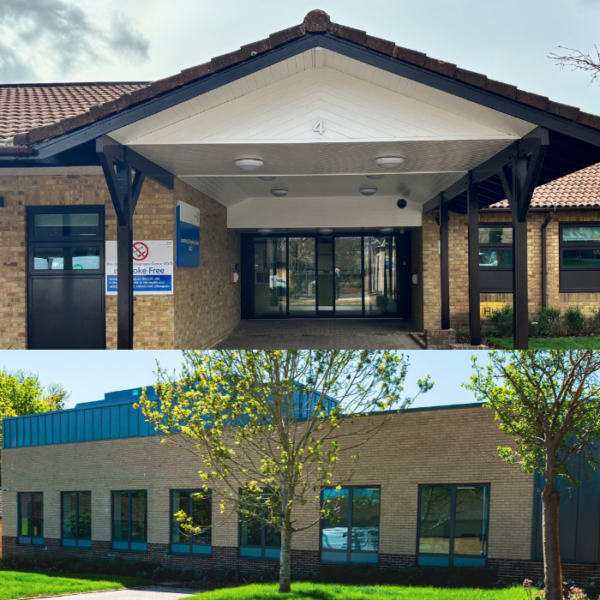
The new services build on the blood testing service, which will move from the main outpatients’ department at St Margaret’s Hospital to the CDC (pictured, top) on 16 November. Delivered by the experienced Health Services Laboratories (HSL) phlebotomy team, the service will offer a modern setting and more appointment availability, with capacity for around 230 blood testing patients each day. GP-referred patients can continue to book through Swiftqueue. Blood testing also remains available at the Harvey Centre in Harlow, Herts and Essex Hospital in Bishop’s Stortford, and at some health centres and GP practices.
The other services will be within the new CDC extension (pictured, below). Two X-ray rooms will open from the week beginning 14 December (see map). The walk-in service will be open from 8am to 7.30pm, Monday to Friday, and 9am to 4.30pm at weekends. Patients referred by their GP will not need an appointment, while patients referred by a specialist outpatient clinic can attend during these times. X-ray services will move to the CDC from their current location in the St Margaret’s Hospital outpatients’ department.
A fourth ultrasound room will also open from the week beginning 14 December. It will provide consultant- and sonographer-led non-obstetric (non-pregnancy) ultrasound, as well as procedures such as ultrasound-guided steroid injections. Appointments are required following referral via GP or specialty.
FibroScan appointments will also start from the week beginning 14 December. FibroScan is a quick, non-invasive test that checks liver stiffness and fat levels. It is commonly used to assess and monitor conditions including fatty liver disease, alcohol-related liver disease and viral hepatitis. Transnasal endoscopy (TNE) appointments will start in early 2027. TNE uses a thin, flexible camera passed through the nose to examine the food pipe, stomach and first part of the small intestine. Both services require an appointment following specialist referral.
A dedicated nurses’ station will support patients recovering after interventional diagnostic procedures—minimally invasive procedures that use imaging to guide diagnosis or treatment, such as ultrasound-guided injections. Pre-assessment clinics will also run from the centre, checking patients’ health and readiness before a planned procedure. The haematuria one-stop clinic will continue at weekends, providing the tests needed in one visit for patients with blood in their urine.
In addition to the blood testing activity, around 350 more patients are expected to use the CDC each day from 14 December as the new services open. Self-check-in and digital wayfinding will continue to help patients move through the centre easily, and parking arrangements at St Margaret’s Hospital remain unchanged.
Thom Lafferty, Chief Executive, said: “This major expansion at St Margaret’s CDC marks an important step forward in how we provide diagnostic care for our communities.
“By bringing together blood testing, X-ray, ultrasound and specialist diagnostics in one modern centre, we will give thousands more patients faster, easier access to the tests and treatment they need, closer to home.
“This is more than an increase in capacity. It is about creating a joined-up, efficient and welcoming service that supports earlier diagnosis, improves the patient experience and delivers more care in the right place.”
Pictured: St Margaret’s Community Diagnostic Centre (top) and the St Margaret’s Community Diagnostic Centre extension (below).