
What is Whiplash?
Whiplash is a neck injury caused by a sudden movement of the head forwards, backwards, or sideways. It commonly occurs during road traffic collisions, particularly when a vehicle is hit from behind, but it can also happen during sports injuries, falls, or other accidents. The rapid movement can strain muscles, ligaments, and other soft tissues in the neck.
Common Symptoms
- Neck pain and stiffness
- Difficulty moving the neck
- Headaches, often starting at the base of the skull
- Pain in the shoulders, upper back, or arms
- Muscle spasms
- Tenderness around the neck
- Tiredness or fatigue
Some people may also experience dizziness, tingling or numbness in the arms, difficulty concentrating, disturbed sleep, and irritability.
When Should I Seek Urgent Medical Advice?
Seek immediate medical attention if you have severe or worsening neck pain, weakness in your arms or legs, loss of sensation, problems with balance or walking, loss of bladder or bowel control, significant injury following a major accident, or severe headache, confusion, or loss of consciousness.
How is Whiplash Treated?
Whiplash is usually treated by staying active, performing gentle neck exercises, managing pain with appropriate medication, and using cold then heat therapy to relieve symptoms while gradually returning to normal activities. Most people recover within a few weeks to a few months.
Pain Relief
Paracetamol and, where appropriate, anti-inflammatory medication. Applying a cold pack during the first 48-72 hours after injury may help reduce discomfort. After this period, switching to heat therapy, such as a warm pack, may help ease muscle stiffness and relieve symptoms. Always follow the instructions provided with any medication and seek advice from a healthcare professional if you are unsure.
Neck brace (collars)
Neck braces (collars) are not routinely recommended for most people with whiplash injuries. Remaining active, early movement and the following exercises can help reduce pain and improve recovery. A neck collar may occasionally be recommended by a healthcare professional in specific circumstances. If you have been advised to wear a collar, follow the instructions provided regarding when and how long to use it.
Exercises
Perform exercises 2–3 times daily within a comfortable range.
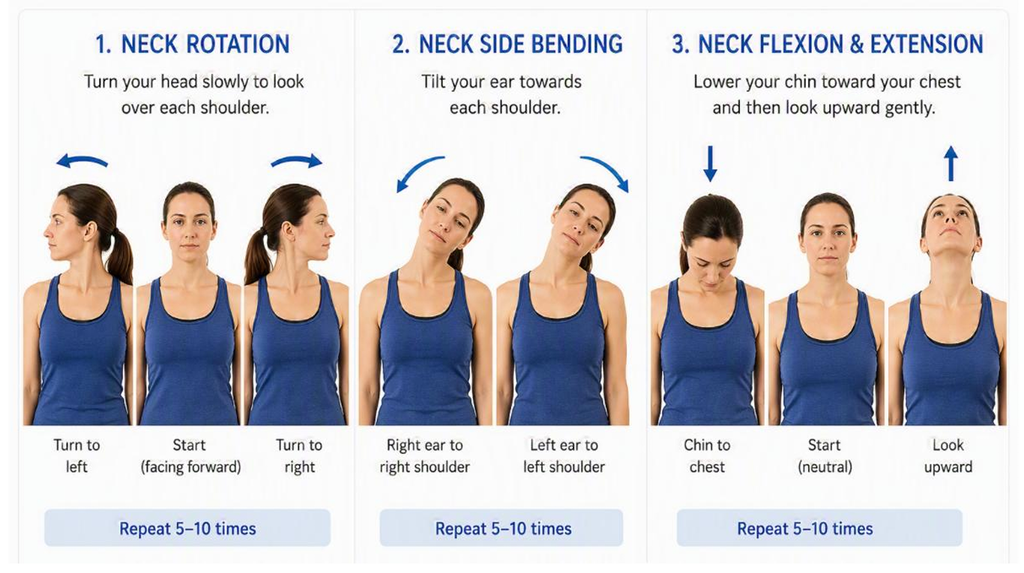
Driving
You should only drive when you can comfortably and safely perform all necessary movements, including checking over your shoulders and responding quickly in an emergency. Do not drive if pain, stiffness, medication or restricted movement affects your ability to control the vehicle safely.
Self-Management Tips
Stay active within your comfort level. Return to sporting activities should be gradual and based on comfort and function. Avoid contact sports, heavy lifting and activities that significantly increase pain until symptoms have improved. Build up intensity slowly and stop if symptoms worsen.
- Take regular breaks from desk work.
- Maintain good posture.
- Use a supportive pillow for sleep.
- Gradually return to exercise and hobbies.
Follow-Up
Contact your GP, physiotherapist, or healthcare professional if symptoms are not improving after a few weeks, pain is limiting activities, or you develop new symptoms such as numbness, weakness, or dizziness.
Contacting the team
If you have any questions about your care during your visit, please speak to a member of the nursing or reception team If you would like this leaflet in another language or format, or you would like to give feedback on your care, please contact our patient experience team on [email protected]