
Overstretched Bladder (259kB pdf)
Introduction
We hope this guide will answer your questions about Overstretched Bladder. Please contact the team if you require further information via the details at the end of this leaflet.
What is an Overstretched Bladder?
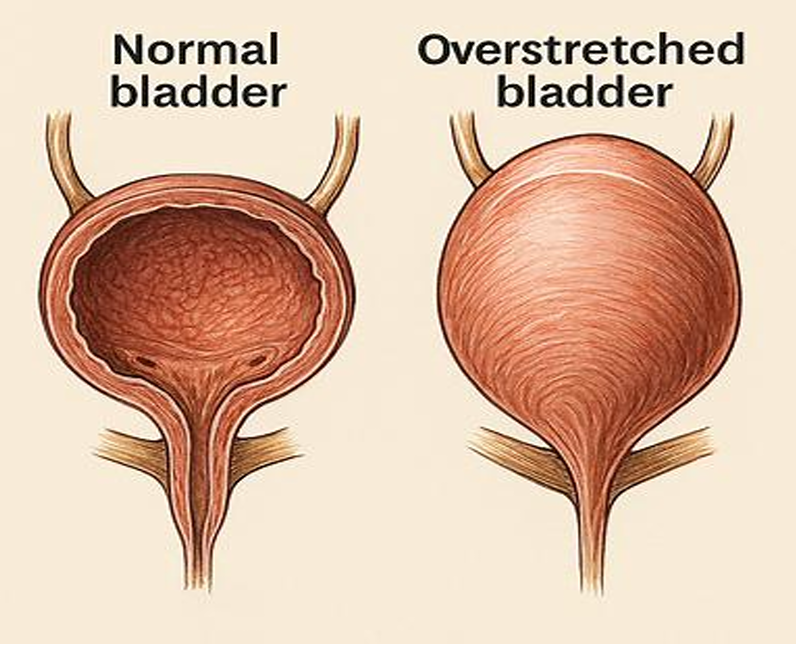
An Overstretched Bladder is where the bladder has become enlarged over a period of time, effectively ‘stretching’ the bladder wall.
What causes an Overstretched Bladder?
An overstretched bladder generally occurs when there is loss of muscle tone resulting the bladder failing to detect the fact that the bladder is full of urine. Causes of an overstretched bladder include;
- blockages in the urinary tract such as an enlarged prostate making it difficult to pee causing the bladder to stretch
- inability to completely empty the bladder resulting in high volume storage issues forcing the bladder to stretch to hold more
- loss of bladder muscle tone resulting in the bladder not emptying effectively causing the bladder to stretch
- reduced bladder nerve function either through trauma, spinal injury, or neurological conditions such as Multiple Sclerosis, which can impair the body’s ability to perceive bladder fullness or empty properly
- severe constipation which can impact on the bladder’s normal function
- Habitual holding of urine regularly for long periods can result in the bladder becoming used to holding larger volumes stretching the bladder, affecting its ability to empty properly
The bladder is like a balloon and expands as it fills with urine. The normal capacity for a bladder is between 400-600ml in most people. The bladder stretches to accommodate this and when you pee it returns to its normal size.
Normally people get a sensation of fullness or pressure in the bladder when it becomes full of urine, which disappears when you pee. However, for some people, the fullness or pressure doesn’t go away and continues to persist which can cause abdominal pain.
Are there any risks of having an Overstretched Bladder?
An overstretched bladder generally causes pelvic or abdominal discomfort, but for some people this pain can be more intense leading to nausea and vomiting, urge incontinence and sometimes urinary tract infections and kidney damage.
What can I do to improve my situation?
There are a few things that you can do to help reduce the impact and effects of an overstretched bladder.
- change your toilet habits. Try not to hold on to your pee for long periods by going to the toilet every 3-4 hours, even if you don’t feel the urge. This will help reduce the amount of urine your bladder is holding
- ensure you drink plenty of fluids, at least 1-1.5lt of water-based fluids per day in addition to your normal tea/coffee intake. Water helps to keep the urinary tract healthy
- keep active, try to walk a little more or participate in regular activities/ exercise
- do regular pelvic floor or Kegel exercises. Pelvic floor exercises can help improve bladder muscle tone
How do I do Pelvic Floor/ Kegel Exercises?
Pelvic Floor/ Kegel exercises can be done at any time in either a lying down or sitting position. You can do them when you are driving, sitting at a desk, watching TV or laying in bed.
You should aim to do Pelvic Floor/ Kegel exercises 3 times per day, and they only take 2-3 minutes to do.
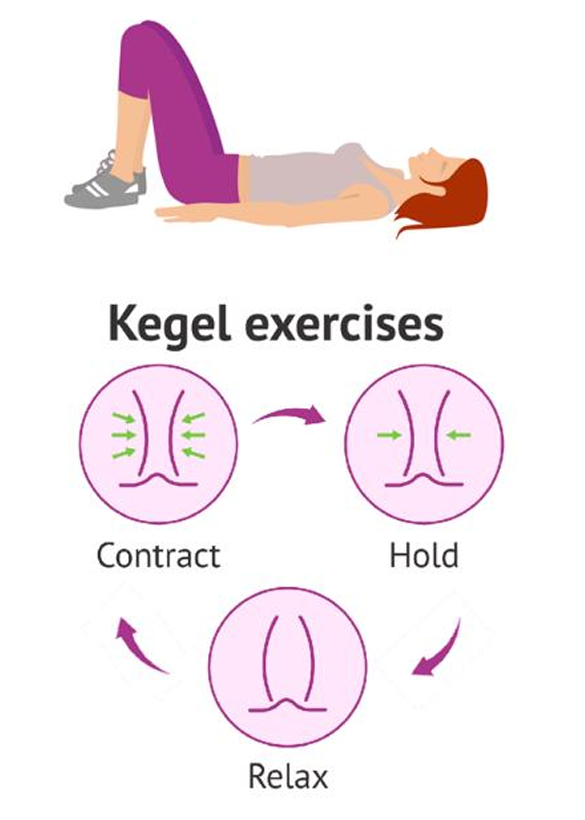
Pelvic Floor/ Kegel Exercise
These exercises feel like you are pretending to pee and then holding it; you relax and tighten the muscles that control urine flow.
Next time you go for a pee, once you start to go stop – hold it. You should feel the muscles in your bladder, anus and vagina (in women) get tighter and move up slightly, this is your Pelvic Floor. Your thighs, abdomen and bottom should remain relaxed.
Once you know where your Pelvic Floor muscles are and what it feels like to tighten them you can them go onto doing the Kegel exercises.
- Make sure you have emptied your bladder fully if possible, then either sit or lie down
- Tighten your pelvic floor muscles and hold for 5 seconds
- Relax for 5 seconds
- Repeat process for tightening and relaxing 10 times, and try to do this 3 times per day
- Remember to breathe deeply and relax your body when doing the exercises and make sure you are not tightening your stomach, thighs, bottom or chest muscles when doing them
- It may take several weeks before you notice any major improvement but it is important that once you start them that you continue with them. There is no need to overdo the amount or number of times you do these exercises
Contacting the team
If you have any further questions, please contact the Urology Booking Team on:
Telephone – 01279 962391 or
Office hours: 09:00 to 16:00
There is an answerphone available outside of these hours. Please leave a message and a member of the team will contact you.
If you would like this leaflet in another language or format, or you would like to give feedback on your care, please contact our patient experience team on [email protected]