
Introduction
We hope this guide will answer your questions about Bladder Training. Please contact the team if you require further information via the details at the end of this leaflet.
Why do Bladder Training?
Bladder Training can be particularly useful if you have go to the toilet more than 8 times in a 24hr period and more than once per night – which is often referred to as Frequency or Overactive Bladder.
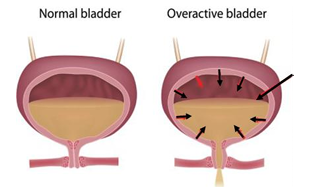
The bladder is essentially a muscular sac and as your bladder fills up with urine it sends a signal to the brain to let you know you need to go to the toilet.
Generally, we are able to hold the urine in our bladder until it is convenient to go to the toilet when the bladder muscles begin to contract allowing us to pass urine.
However, for some people who may suffer with urgency, frequency, or an overactive bladder, they are not able to wait until it is convenient, and this is where bladder training may help.
Bladder training is considered conservative therapy and the first line treatment for symptoms associated with overactive bladder.
Its main aim is to teach your bladder to hold more urine, thus increasing the length of time between emptying, and therefore reducing the number of times you need to go to the toilet over all.
Research has shown that bladder training can also help reduce frequency, urgency and leaking of urine.
Bladder training, as it sounds, is about training your bladder to be more efficient, loosing bad habits, creating new ones, and taking control of your bladder rather than your bladder controlling you.
Bladder training helps to:
- increase the length of time between going to the toilet
- increase the amount of urine your bladder can hold
- reduce and control urgency
What do I need to do to train my bladder?
There are a few steps to improving your bladder function; some of which may require a change in life style to achieve maximum benefit.
First Step
For a period of 2-3 days go to the toilet as normal and keep a record of how much you drink daily, what types of fluids you are drinking, and when.
Record the times you go to the toilet and measure how much pee you pass, and whether or not you experience any leaking of urine. This will help give you a baseline to identify the extent of your particular problem.
Second Step
Once you have this baseline data, when you feel the urge to go for a pee, try to wait 2-5 minutes before going as this will allow your bladder to stretch a little. Continue to hold your pee for short periods of time each time you get the urge, and over time this will enable your bladder to stretch comfortably and therefore hold larger amounts of urine without discomfort. As your bladder gets used to holding more urine the frequency in which you need to empty it will reduce.
Third Step
When you get a real urgent desire to pass urine stay still, cross your legs and tighten your pelvic floor whilst thinking of something else to take your mind off the urge until it dies away. Then walk calmly and at a normal pace to the toilet.
Following these simple steps can make a big difference to you and help but there are also a few other things that can help.
Pelvic Floor Exercises
Sometimes as a result of childbirth or surgery, the muscles that support your bladder can become damaged and regular exercises can help strengthen them.
Reducing intake of Caffeine, Alcohol and Fizzy Drinks
Caffeine, alcohol and fizzy drinks in particular can irritate the bladder causing more urine to be formed. Avoiding or reducing their intake, or using decaffeinated drinks can help reduce the irritability.
Constipation
Avoid becoming constipated as a full bowel can put pressure on the bladder and straining can actually weaken the pelvic floor.
Spicy Foods
Avoid overly spicy or acidic foods as these too can irritate the bladder.
Just-in-Case
Avoid going to the toilet Just-in-Case as this reduces the bladder’s ability to hold urine and makes it become more sensitive, increasing the urge to pass urine.
Smoking
Nicotine can irritate the bladder so reducing the amount you smoke or ceasing altogether will help
Always remember… as well as being influenced by muscles and nerves, your bladder is very much under the control of YOUR brain, so it is important that YOU tell it what to do!
Contacting the team
If you have any further questions, please contact the Urology Booking Team on:
Telephone – 01279 962391 or 01279 952807
Office hours: 09:00 to 16:00
There is an answerphone available outside of these hours. Please leave a message and a member of the team will contact you.
If you would like this leaflet in another language or format, or you would like to give feedback on your care, please contact our patient experience team on [email protected]