
Knee_Soft_Tissue_Injury_PIL_v1 (209kB pdf)
What is a knee soft tissue injury?
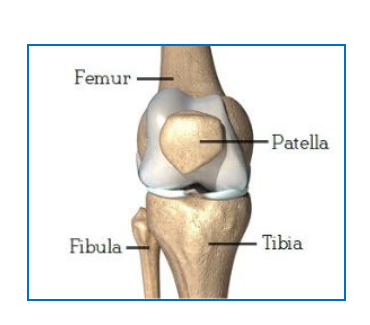
A knee soft tissue injury affects the muscles, ligaments or tendons around the knee and can result from a fall, twist, sudden movement or direct blow. Symptoms may include pain, swelling, bruising, stiffness and difficulty walking
Your treatment plan
- You may put weight through the affected leg as your pain allows, unless a clinician has advised you not to.
- Use elbow crutches or a knee splint if these have been provided. Follow the instructions given by your clinician.
- Increase your activity gradually. Avoid movements or activities that significantly increase pain or swelling.
Follow-up
Most soft tissue injuries improve gradually with self-care and gentle movement. If your symptoms are not improving after a few weeks, are getting worse, or are affecting your usual activities, contact your GP or local musculoskeletal service for reassessment. Further examination, physiotherapy or imaging may be considered depending on your symptoms.
What you can do to support recovery
Cold packs: Wrap an ice pack or frozen peas in a towel and apply to the painful area for up to 15 to 20 minutes every 2 to 3 hours. Do not place ice directly on your skin.
Rest and elevation: Reduce activities that increase your pain during the first 24 to 72 hours. When resting, raise your leg on pillows to help reduce swelling.
Gentle movement: Move your knee, ankle and foot gently and regularly within a comfortable range. This helps reduce stiffness and supports circulation.
Pain relief: Paracetamol or ibuprofen may help, if these are safe and suitable for you. Follow the instructions on the packet. Ask a pharmacist, GP or clinician for advice if you take other medicines, have allergies, are pregnant, or have stomach, kidney, heart or breathing problems.
It is important that you do not exercise through severe or sharp pain. Stop and seek advice if an exercise causes marked pain, swelling, numbness or instability.
Gentle knee exercises
Start these exercises when comfortable, unless your clinician has advised otherwise. Begin gently and build up gradually. Aim for up to 10 repetitions, 2 to 3 times a day. If symptoms increase significantly, reduce the number of repetitions or stop and seek advice.
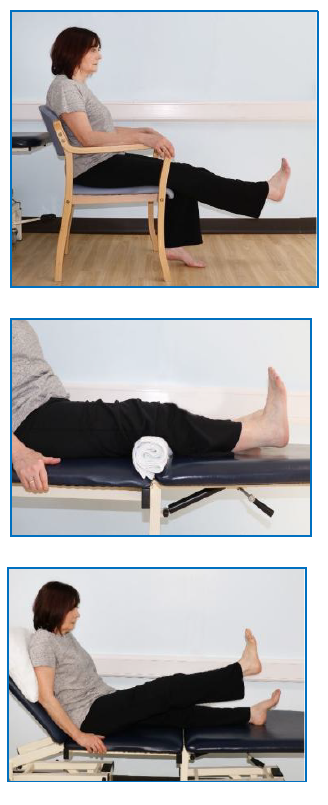
1. Seated knee bend and straighten
Sit upright on a stable chair. Slowly bend and
straighten your injured knee as far as
comfortable. As this becomes easier, straighten
your leg, hold for up to 10 seconds, then lower it
gently.
2. Thigh muscle tightening
Sit or lie with your leg straight. Tighten the front
of your thigh and gently press the back of your
knee down, using a rolled towel underneath if
needed. Hold for 5 to 10 seconds, then relax.
3. Straight leg raise
Lie back with the injured leg straight. Tighten
your thigh, keep your knee straight and slowly
raise your whole leg, then lower it gently. Stop if
you experience significant pain.
When to seek further medical advice
Contact NHS 111 or seek urgent medical advice if your knee becomes very painful, swollen, misshapen, locks or gives way; you cannot move it or put weight on your leg; you develop increasing redness, heat, fever, numbness, tingling or weakness; your foot becomes pale, blue or cold; or your calf becomes painful, swollen, red or hot.
Call 999 immediately if you develop sudden shortness of breath, chest pain or cough up blood.
Driving and work
Do not drive while wearing a knee splint unless you have been told it is safe to do so. You must be able to control the vehicle safely and perform an emergency stop without pain or hesitation. Speak with your employer about temporary changes if your work involves prolonged standing, driving, heavy lifting or manual duties.
Contacting the team
If you have any questions about your care during your visit, please speak to a member of the nursing or reception team.
If you would like this leaflet in another language or format, or you would like to give feedback on your care, please contact our patient experience team on [email protected]