
Therapeutic Venesection (352kB pdf)
Introduction
We hope this guide will answer your questions about your Therapeutic Venesection. Please contact the team if you require further information via the details at the end of this leaflet.
What is a therapeutic venesection?
Therapeutic venesection is a simple and quick procedure to reduce red blood cells or iron that you have in your blood.
The procedure will reduce the amount of blood in your body by removing about one pint (half a litre) of blood at a time. It is similar to the procedure used for donating blood.
Why do I need a therapeutic venesection?
Your consultant has recommended that you have a therapeutic venesection to either reduce the number of red cells in your blood, or to reduce the amount of iron in your body, depending on your underlying medical condition.
The following medical conditions are often treated with regular venesection procedures:
Polycythaemia
This is when you have too many red cells in the blood which makes the blood too thick. If the blood is too thick, it can be difficult for blood to flow through your body, especially through small blood vessels.
This can lead to an increased risk of thrombosis (blood clots), myocardial infarction (heart attack) or strokes occurring. In this case, venesection is necessary to remove blood on a regular basis to reduce the number of red cells and make the blood thinner.
Haemochromatosis
This is when your body continues to absorb iron from your food even when you have enough stored.
You are not able to get rid of the extra iron and this is deposited in other organs of the body. If high levels of iron are deposited, damage to organs can occur and potentially lead to insulin dependent diabetes, liver damage, arthritis, infertility and impotence in men.
Every pint of blood removed contains a quarter of a gram of iron. The body then uses the excess stored iron to make new red blood cells. With regular venesections, the iron stores are gradually reduced.
Iron overload
This is caused as a result of having lots of blood transfusions in the past which has resulted in excess of iron being stored.
Every pint of blood removed contains a quarter of a gram of iron. The body then uses the excess stored iron to make new red blood cells. With regular venesections, the iron stores are gradually reduced.
Your consultant will explain the reason for your procedure before your venesections start.
Preparing for your procedure
Eating and drinking
Please eat as normal and drink plenty of fluids prior to your venesection as it will make it easier to insert the needle into one of your veins and you are less likely to feel faint following the procedure.
If you are unwell on the day of the procedure, please contact the William’s Day Unit for advice.
Medication
Please let us and consultant know if you are taking tablets to control your blood pressure, we may ask that you omit them on your first visit.
Getting to us
We are based in the William’s Day Unit, building 5, at The Princess Alexandra Hospital in Harlow.
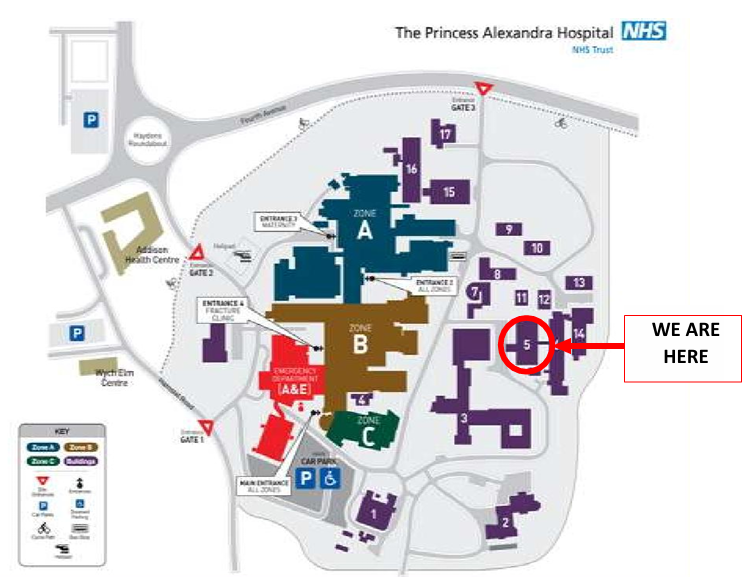
When should I arrive?
Please arrive at your allocated time slot, register at the reception desk, and take a seat in the waiting area. Your nurse will then call you through to the main treatment area.
The procedure
Before the procedure is carried out, your nurse will explain what will happen and answer any questions that you may have.
Following this, you will be seated and your blood pressure and pulse rate will be recorded.
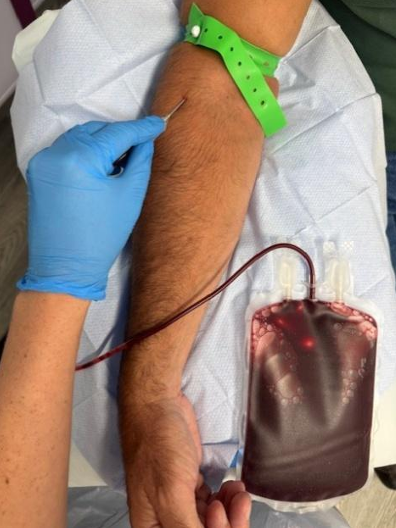
A tourniquet, a small device to stop the blood flow through a vein, is applied to your arm in the same way as if you were having a blood sample taken. The needle, which is already attached to the blood collection bag, is inserted into a vein in your arm. It will be fixed in place with tape.
The collection takes about 15 minutes and when it is finished, the needle is removed and pressure is applied to that area for a few minutes, followed by a small dressing.
After the procedure, you may feel a little dizzy, which is normal. At this stage, we encourage you to have a drink, and stay seated for another 20 minutes
After the procedure
Light-headedness or fainting
Sometimes people can feel light-headed, dizzy or have blurred vision during, or shortly after a venesection. If this happens, it is important that you tell your nurse immediately.
Resting for a short while following the venesection and making sure you have something to eat and drink before the venesection can help to prevent this.
If you faint, we may give you fluid through a vein in your other arm during subsequent venesections, to help you feel better.
We will check your blood pressure and pulse again before you are able to go home.
Bruising
You may have a bruise where the needle has been inserted and this will disappear after a few days. You should avoid lifting heavy objects with this arm for 24 hours following your venesection.
Bleeding from the needle insertion site
After removing the needle, your nurse will apply pressure to the area and a small dressing will be applied.
If you are on blood thinners like Warfarin, pressure will be applied for at least ten minutes after the procedure and we may ask you to stay a little longer to check there is no bleeding once pressure has been removed.
Occasionally the area can start to bleed after you have left the day unit. If this happens, please apply pressure directly over the area for several minutes until the bleeding has stopped.
Can I drive after my procedure?
There is no reason why you should not drive, or continue with normal activities before and after the procedure.
We would recommend that you do not drive when you come to hospital for your first venesection treatment. You may feel light-headed or dizzy afterwards.
How often will I need venesections?
This will depend on your medical condition and your general health. Your consultant will have explained to you how often you will need venesections to start with and this will be reviewed regularly.
You may need a blood test within a week of each venesection to monitor the amount of iron or red blood cells in your blood.
If you have a venesection more often than a monthly basis, these blood samples will be collected at the same time as your venesection procedure.
Before each procedure, your blood results will be reviewed to ensure that the venesection is necessary. Your consultant will be kept informed and will continue to monitor your progress at your outpatient clinic appointment.
Can someone stay with me in hospital?
If you feel anxious before your procedure and would like to bring someone with you to keep you company, we ask that they wait in the William’s Day Unit waiting area. They will not be allowed in the treatment area.
How soon can I return to work?
You may resume normal activities after the procedure, but you should avoid strenuous or athletic activities until the next day. Please discuss this with your doctor or specialist nurse.
You should inform your employer that you are returning to work following venesection treatment.
Can I drink alcohol?
Alcohol can cause dehydration and it is important to avoid becoming dehydrated, particularly prior to your venesection.
Alcohol can also increase your risk of bruising or bleeding following your venesection. We therefore recommend that you avoid alcohol the day before and on the day of your venesection.
Can my blood be donated?
Although the venesection is a similar procedure to a blood donation, we cannot use your blood for this purpose and it is always disposed of. If you would like to be a volunteer blood donor details can be found on the Give Blood website (www.blood.co.uk).
Blood donations can be discussed with your doctor or haematology specialist nurse. If you decide to donate blood, please inform us at your next clinic visit as we need to keep a record of how much blood is being taken.
Contacting the team
If you have any further questions, please contact the haematology clinical nurse specialist via the details below:
Telephone: 07932 528177
Office hours: 8am-4pm
There is an answerphone available outside of these hours. Please leave a message and a member of the team will contact you the next working day.
Your feedback matters
If you would like this leaflet in another language or format, or you would like to give feedback on your care, please contact our patient experience team on [email protected]