
Trial Without Catheter (TWOC) (237kB pdf)
Introduction
We hope this guide will answer your questions about Trial Without Catheter. Please contact the team if you require further information via the details at the end of this leaflet.
Trial Without Catheter (TWOC)
You have an appointment to attend The Oak Unit which is situated at St. Margaret’s Hospital, in Epping. Oak Unit is the specialist Urology outpatient department for The Princess Alexandra Hospitals NHS Trust where TWOC’s are undertaken.
The procedure itself will be explained in more detail when you arrive but in terms of preparation the following information will be useful to you.
TWOC is a planned procedure to remove your catheter and monitor your fluid input and urine output to assess if your bladder is emptying and you are passing urine normally, without the aid of the catheter.
Once your catheter has been removed you will be asked to drink water/ fluids, about one cup every 10-15 minutes, and record it on a form the nurse will give you.
After an hour or so, the nurse attending to you will review how much you have drunk and how much urine you have passed.
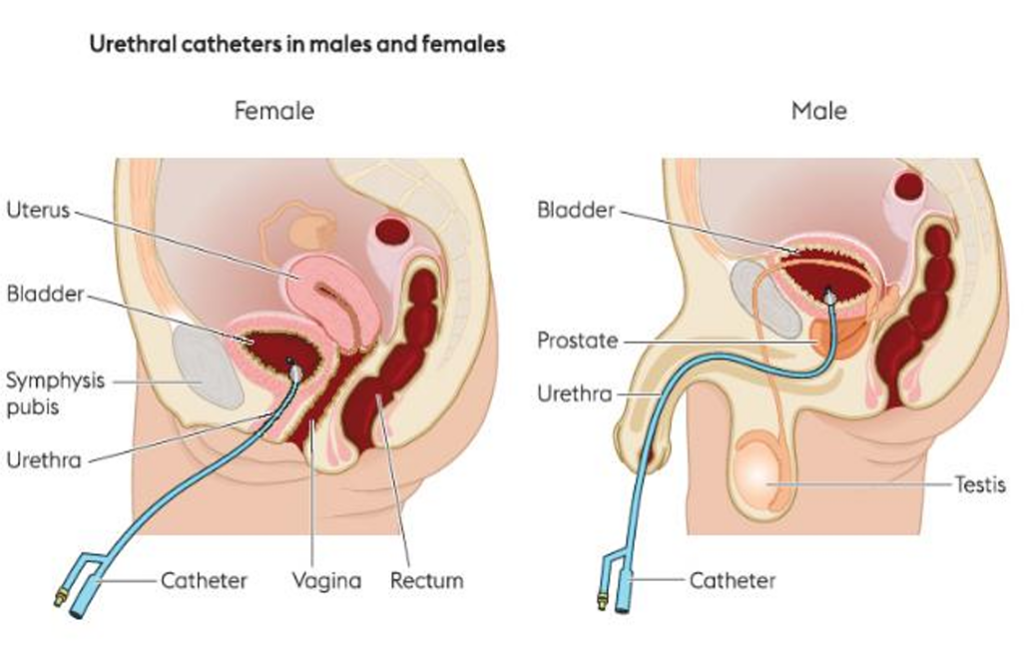
After an hour or so, the nurse attending to you will review how much you have drank and how much urine you have passed.
You will have a bladder scan to see if your bladder is emptying properly, and if not, how much residual volume is left.
How long you may be required to stay in the department will depend on how well your bladder is emptying, but you should be prepared to stay between 2 to 3 hours.
Is there anything I can do before my appointment?
Yes – before your appointment you may find it useful to;
- Make sure you have continued to take all your prescribed medication – especially male patients who may be taking medication for their Prostate
- Make sure you are not constipated. If you suffer with constipation please make sure you have contacted your GP and arranged for any medication to help you to go to the toilet. It is important that you have emptied your bowels within the last 24-48 hours before your appointment
- Make sure that you drink between 1.5-2 litres of water/ fluid per day whilst your catheter is in place
What will happen if I do not pass urine after my catheter has been removed?
If you are unable to pass any urine after your catheter has been removed then you may need to have a catheter replaced, or if appropriate, you may be taught how to self catheterise, this is called intermittent self catheterisation.
Should this be the case, an appointment will be made for you to meet with your consultant to discuss any further treatment.
What will happen if I do pass urine after my catheter has been removed?
Depending on how well your bladder is emptying, you may not need to see the consultant again and you can be followed up by your GP, but an appropriate follow-up will be arranged if required.
You should continue to drink between 1.5-2 litres of fluid per day following a successful TWOC and ensure you pass urine at least every 4 hours (even if you do not feel the need to pass urine), to strengthen your bladder muscle.
Even though you may have passed TWOC at your appointment there is still a risk that you could still go into urinary retention for up to 2 weeks after your TWOC.
Therefore, if you feel that your bladder is not emptying properly, or you experience frequency (with or without pain), or you have abdominal pain, start dribbling urine, or are unable to pass any urine at all, then please seek medical advice either from your GP, NHS Direct, or the Emergency Department – it may be that you will need another catheter especially if unable to pass any urine.
Contacting the team
If you have any further questions, please contact the Urology Booking Team on:
Telephone – 01279 962391 or 01279 952807
Office hours: 09:00 to 16:00
There is an answerphone available outside of these hours. Please leave a message and a member of the team will contact you.
If you would like this leaflet in another language or format, or you would like to give feedback on your care, please contact our patient experience team on [email protected]